
Learning and Practice Improvement Framework
Scope of this chapter
This chapter covers the requirements within Chapter 4 of Working Together to Safeguard Children, which describes the way that professionals and organisations protecting children need to reflect on the quality of their services and learn from their own practice and that of others. It explains the requirements for an integrated local learning and improvement framework.
Working Together requires that the Local Safeguarding Children Partnership (SCP) maintain a shared local learning and practice improvement framework across those local organisations working with children and families.
This local framework covers the full range of single and multi-Agency reviews and audits which aim to drive improvements to safeguard and promote the welfare of children. The different types of review include:
- Child death review (see Chapter 5: Child death reviews of Working Together to Safeguard Children: a review of all child deaths under the age of 18;
- Review of a child protection incident which falls below the threshold for a Serious Incident Notification;
- Performance Information – In conjunction with the local Quality Assurance and Scrutiny schedule, the Partnership collates multi-Agency data to enable the SCP to monitor progress and further understand safeguarding services. Performance monitoring enables the SCP to measure the progress towards its Business Plan objectives and ensure learning is embedded across the partnership;
- Review or audit of practice in one or more agencies;
- Programme of Mult-Agency Audits - This is the work undertaken to drill down and test the effectiveness of practice and determine what works well and what we can do to improve. The topics of the audits are determined by performance data, quality information and responses to recommendations from inspections and child safeguarding practice reviews. The themed multi-Agency audits have a clear focus on outcomes, and the impact of agencies in achieving those outcomes. The impact on the child is always central to the process. The Learning & Practice Improvement sub-group consider the learning from audit activity and seek to disseminate across the partnership;
- Practitioner forums – the forums help people who work with children and young people learn from each other, understand each other’s’ roles and responsibilities and what local provision is available in each part of the county;
- 11 audits - Section 11 (s.11) of the Children Act (2004) places duties on a range of organisations to ensure their functions, and any services that they contract out to others, are discharged having regard to the need to safeguard and promote the welfare of children. Section 11 audits are conducted annually and if an agency does not meet all the s.11 requirements, then an action plan is developed. The Section 11 audit process is managed via the Performance and Quality assurance sub-group. The Learning & Practice Improvement sub-group is responsible for responded to learning identified and recommending training to support.
The aim of this framework is to enable local organisations to improve services through being clear about their responsibilities to learn from experience and particularly through the provision of insights into the way organisations work together to safeguard and protect the welfare of children.
The framework should be shared across all agencies that work with families and children. Working Together states that ‘This framework should enable organisations to be clear about their responsibilities, to learn from experience, focusing on learning to support continuous improvements in practice and improve services as a result’.
This should be achieved through:
- Reviews conducted regularly;
- Such reviews to encompass both those cases which meet statutory criteria (i.e. child safeguarding practice reviews and child death reviews) and cases which may provide useful insights into the way organisations are working together to safeguard and protect the welfare of children;
- Reviews examining what happened in the case, why it did so and what action will be taken to learn from the findings;
- Learning from what worked well and areas for improvement in relation to the organisational strengths and weaknesses within local services to safeguard children;
- Implementation of actions arising from the findings which result in lasting improvements to services;
- Transparency about the issues arising and the resulting actions organisations take in response to the findings from individual cases, including sharing the final reports of Child Safeguarding Practice Reviews with the public.
Reviews are not an end in themselves, but a method to identify improvements needed and to consolidate good practice. The SCP and partner organisations will translate the findings from reviews into programmes of action which lead to sustainable improvements.
There is considerable local discretion as to what the Learning and Practice Improvement Framework will look like in any area. It will need to take into account the SCP structure and partnership arrangements and aim to be as inclusive as possible.
In conjunction with the local Quality Assurance and Scrutiny schedule, the local learning and Improvement framework arrangements will need to develop shared audit tools, processes for capturing the views of service users and a system for sharing learning with the wider workforce.
There should be a culture of continuous learning and practice improvement across the organisations that work together to safeguard and promote the welfare of children, so as to identify what works and what promotes good practice. Continuous Improvement is supported by ongoing evaluation of the Impact.
Within this culture the principles are:
- A proportionate response: According to the scale and level of complexity of the issues being examined i.e. the scale of the review is not determined by whether or not the circumstances meet statutory criteria;
- Independence: Reviews of serious cases to be led by individuals who are independent of the case under review and of the organisations whose actions are being reviewed;
- Involvement of practitioners and clinicians: Professionals should be fully involved in reviews and invited to contribute their perspectives without fear of being blamed for actions they took in good faith;
- Offer of family involvement: Families, including children, should be invited to contribute to reviews and be provided with an understanding of how this will occur;
- The child to be at the centre of the process;
- Transparency: Achieved by publication of the final reports of Child Safeguarding Practice Reviews and the SCP’s response to the findings. The SCP annual reports will explain the impact of Child Safeguarding Practice Reviews and other reviews on improving services to children and families and on reducing the incidence of deaths or serious harm to children. This will also inform inspections;
- Sustainability: Improvement must be sustained through regular monitoring and follow-up so that the findings from these reviews make a real impact on improving outcomes for children.
There is an understandable focus on Child Safeguarding Practice Reviews given the profile of this type of review, however it should be remembered that they are not the only process that should drive learning and practice improvement. SCP’s should pay equal or greater attention to the dissemination processes for learning giving consideration to:
- The need to reach a multi-Agency audience;
- An understanding of adult learning;
- The on-going training and development needs of certain professional groups.
Clearly one approach will not be suitable for all learning and every agency; a range of learning opportunities should be provided that could include: inter-professional discussion forums, specific dissemination events, thematic presentations (combining the learning from several different reviews) and the uses of SCP newsletters to produce factsheets on specific topics.
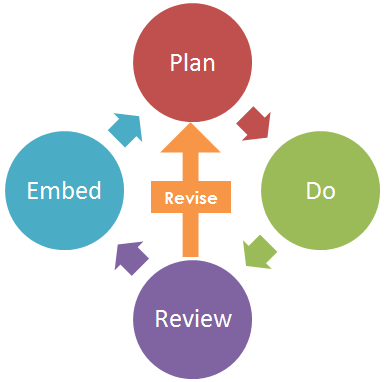
Learning is disseminated to front line Practitioners to improve practice and lead to better outcomes for Children and Young People. The Learning and Practice Improvement Subgroup are responsible for the planning, co-ordination, commissioning and evaluation of high quality multi-Agency training to the children’s workforce. The group ensures that the learning and development provided within agencies will equip professionals to safeguard children.
The Core functions of the Learning and Practice Improvement sub group are;
- Develop and review a multi-agency learning and development programme that reflects local and national policies, current research and emerging practice developments;
- Analyse and report on recurring themes arising from audits, reviews and feedback, ensuring these inform training priorities and programme development;
- Seek assurance regarding single-agency provision of training and learning, ensuring alignment with WFSCP priorities and consistency of safeguarding standards;
- Make evidence-based recommendations for the implementation and improvement of training and learning in line with WFSCP priorities, learning from Child Safeguarding Practice Reviews (CSPRs) and reviews of child deaths;
- Ensure that learning from CSPRs and other reviews is embedded across all multi-agency training and actively supported to be incorporated into single-agency training, with processes to monitor the reach, uptake and impact of such learning;
- Monitor and evaluate the quality, effectiveness, and impact of the WFSCP multi-agency learning programme on safeguarding practice;
- Support, develop, and monitor the WFSCP trainers’ pool, fostering a collaborative multi-agency network of skilled safeguarding trainers;
- Provide multi-agency learning and practice improvement opportunities that are reflective of learning from both national and local reviews, ensuring continual professional development and consistency of safeguarding approaches;
- Receive and respond to learning and practice improvement information arising from the Section 11 / Section 175 audits;
- Provide annual assurance on the impact and effectiveness of WFSCP training across the multi-agency workforce;
- Ensure that the voice of the child is consistently captured and embedded in the development, delivery, and review of all training programmes.
The SCP Training Strategy is aligned with the SCP Business Plan and details the expectations of Westmorland and Furness Safeguarding Children Partnership and the responsibilities of all staff and volunteers within the local workforce in relation to safeguarding children training. The strategy describes how all agencies will be monitored against their responsibilities in ensuring staff/volunteers have the skills and support to keep children safe and provides guidance on the training and development of staff and volunteers to help them safeguard and promote the welfare of children effectively.
Last Updated: February 5, 2026
v20


You can translate the content of this page by selecting a language in the select box.
Copyright © tri.x